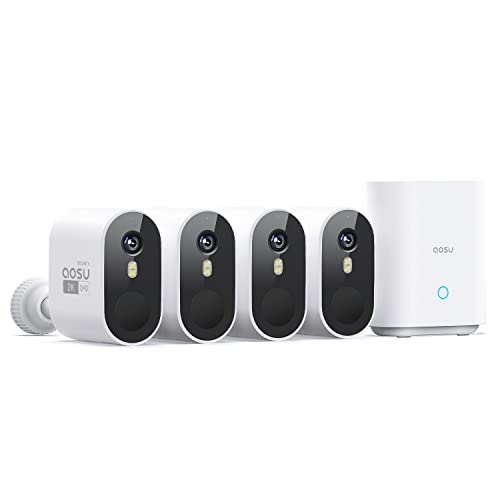
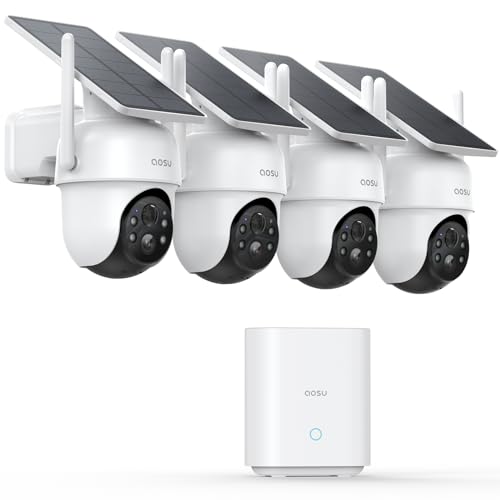
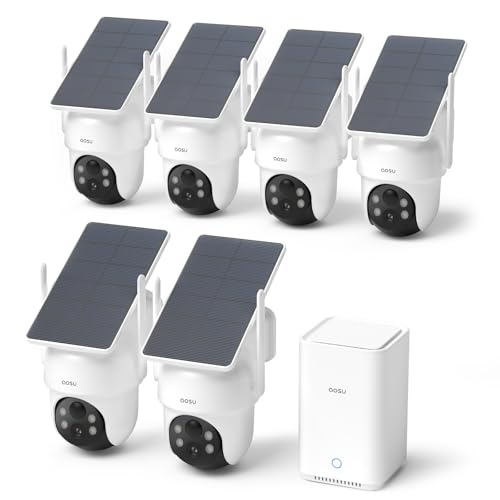
Overview of the Best AOSU Security Cameras
Wireless security cameras have reached the point where protecting a home no longer means drilling cable runs or signing up for yet another monthly subscription. AOSU has become one of the fastest-rising names in this space by focusing on exactly that promise: solar-powered, truly wire-free cameras with sharp 3K-to-4K video and local storage included — no cloud fees, no contracts.
The AOSU systems featured here are multi-camera kits built around a central home base station. Cameras connect wirelessly to the base, which stores footage locally and acts as a signal hub, extending range across the property. Solar panel options keep batteries topped up year-round — a meaningful advantage through Canadian winters, when ladder trips to recharge a camera are the last thing anyone wants.
Day to day, the experience is defined by what you do not deal with: no subscription paywall on playback, no cables, and far fewer false alerts thanks to on-device person and vehicle detection. Colour night vision with built-in spotlights captures usable detail after dark, two-way audio lets you speak to visitors or warn off intruders, and the app brings every camera into a single live view.
Standout picks right now:
From a two-camera starter kit for a townhouse to a four-camera solar system covering a detached home's full perimeter, the AOSU lineup below scales to the property — not to a subscription tier. Every model is available on Amazon with fast delivery and free returns, and several are currently discounted.
How to Choose the Right AOSU System
AOSU kits differ mainly in camera count, resolution, and how the batteries stay charged. Start from the areas you need covered and how much maintenance you are willing to do, and the choice narrows quickly. These are the factors that actually matter.
Camera Count and Coverage
Map your property's approach points first: front entrance, back door, driveway, and any side passage. A 2-camera kit covers a townhouse or condo entrance well; detached homes typically need four cameras for full perimeter coverage. Because cameras pair to the base station rather than your router, adding coverage later is straightforward — buy the kit that covers today's needs.
Solar vs Battery-Only Charging
Battery-only cameras run months per charge, but solar panels remove the chore entirely: a few hours of daylight per day keeps the battery full indefinitely, even accounting for shorter winter days. For cameras mounted high on second-storey eaves, solar is the difference between a maintenance-free system and a twice-yearly ladder ritual.
Resolution and Night Vision
3K resolution comfortably captures faces and licence plates at typical driveway distances, and 4K models add extra margin for digital zoom. After dark, spotlight-equipped cameras record in full colour — far more useful for identification than grainy infrared. Position colour night vision at entrances and parking areas, where detail matters most.
Local Storage and No Monthly Fees
The base station stores footage locally, viewable and downloadable from the app at no cost — the complete opposite of camera brands whose recordings sit behind a monthly cloud paywall. Over a few years of ownership, the savings against subscription-based competitors typically exceed the price of the entire kit. Optional cloud backup exists, but nothing essential is paywalled.
Smart Detection and Alerts
On-device AI distinguishes people and vehicles from swaying branches and passing cats, so your phone buzzes only for events that matter. Customizable activity zones let you exclude the sidewalk or a busy street from triggering alerts. Two-way audio turns any camera into an intercom — handy for couriers as much as for security.